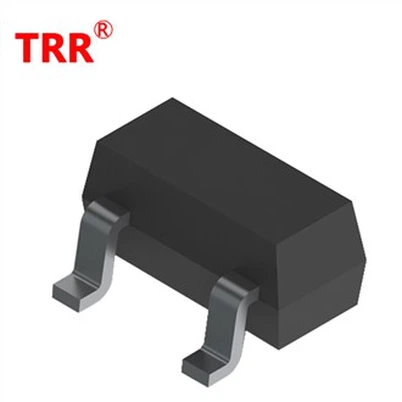
Do LED diodes have positive and negative poles?
Leave a message
The basic structure of LED diodes
LED diode, also known as light emitting diode, is a semiconductor device that can directly convert electrical energy into light energy. Its core structure consists of a PN junction, which is an interface composed of a P-type semiconductor (rich in holes) and an N-type semiconductor (rich in electrons). When the LED diode is forward biased (i.e., the positive pole is connected to the positive pole of the power supply and the negative pole is connected to the negative pole of the power supply), electrons are injected from the N region into the P region, recombine with holes in the P region, and release energy. This energy is radiated out in the form of photons, thereby producing brightness.
Definition and function of positive and negative electrodes
In LED diodes, the positive electrode (usually labeled as anode, Anode) and the negative electrode (usually labeled as cathode, Cathode) are the two key endpoints that distinguish the polarity of LED diodes. The positive electrode is the lead terminal of the P-type semiconductor in the LED diode, while the negative electrode is the lead terminal of the N-type semiconductor. In the working process of LED diodes, the positive and negative poles play a crucial role.
Positive electrode (anode): When the LED diode is forward biased, the positive electrode attracts negative charges (i.e. electrons) from the power source, which pass through the PN junction inside the LED and recombine with holes in the P region, releasing photons. Therefore, the positive electrode is one of the sources of electrons during the emission process of LED diodes.
Negative electrode (cathode): opposite to the positive electrode, the negative electrode is the outflow end of electrons in the LED diode. Under forward bias, electrons in the N region flow out through the negative electrode and recombine with electrons from the positive electrode to emit light at the PN junction. The function of the negative electrode is to ensure that electrons can smoothly flow out of the LED diode, thereby maintaining the normal light emission process.
Identification and connection of positive and negative poles
In practical applications, correctly identifying and connecting the positive and negative terminals of LED diodes is the key to ensuring their normal operation. The positive and negative terminals of LED diodes are usually identified in the following ways:
Physical markings: Many LED diodes have markings on their casings indicating the positive and negative poles, such as "+" or "A" indicating the positive pole, and "-" or "K" indicating the negative pole.
Pin length: In some LED diodes, the positive and negative pin lengths are different, with the positive pin usually being longer and the negative pin being shorter.
Packaging color: In the packaging process of LED diodes, sometimes positive and negative poles are distinguished based on different colors, but this method is not common because color coding may vary by manufacturer.
When connecting LED diodes, it is necessary to ensure that the positive pole is connected to the positive pole of the power supply and the negative pole is connected to the negative pole of the power supply. If the connection is incorrect, the LED diode will not light up and may even be damaged due to reverse voltage.
The consequences of incorrect connection of positive and negative poles
If the positive and negative terminals of the LED diode are connected incorrectly, that is, the positive terminal is connected to the negative terminal of the power supply, and the negative terminal is connected to the positive terminal of the power supply, then the LED diode will be in a reverse bias state. Under reverse bias, the PN junction inside the LED diode will prevent the flow of electrons, so the LED diode will not emit light. In addition, if the reverse voltage exceeds the reverse breakdown voltage of the LED diode, the LED diode may be damaged due to overheating.
Precautions in practical applications
In the practical application of LED diodes, in addition to correctly connecting the positive and negative poles, the following points should also be noted:
Current limiting protection: LED diodes are highly sensitive to current, and excessive current can cause overheating, decreased luminous efficiency, or even damage to the LED diode. Therefore, when connecting LED diodes, it is usually necessary to connect a current limiting resistor in series or use a constant current source to protect the LED diodes.
Heat dissipation design: LED diodes generate a certain amount of heat during operation. If the heat dissipation is poor, it can cause the temperature of the LED diode to rise, thereby affecting its luminous efficiency and lifespan. Therefore, in the application of LED diodes, it is necessary to design the heat dissipation structure reasonably to ensure that the LED diode can work normally.
Voltage matching: The rated voltage of LED diodes is usually lower (such as 2V, 3V, etc.), while the power supply voltage may be higher (such as 12V, 24V, etc.). Therefore, when connecting LED diodes, it is necessary to use a voltage reduction circuit or a voltage divider circuit to match the power supply voltage and the rated voltage of the LED diode.
https://www.trrsemicon.com/diode/high-speed-diode-bas32l.html